




History
The Historic Transformation of Al-Masjid an-Nabawi: From 1972 to the Modern Era.
19-Oct-2026 — Qazi Jawad
0 Comments
27 Views
اردو میں پڑھیں
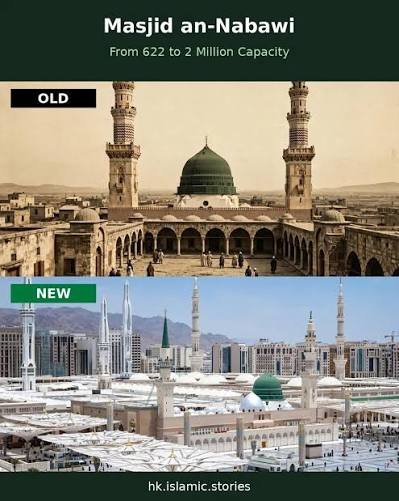
The First Image: The Mosque in 1972
The first image reportedly shows the exterior of Al-Masjid an-Nabawi in Madinah following the first major Saudi expansion undertaken during the reign of King Abdulaziz Al Saud, which took place between 1951 and 1955.
By 1972, the mosque’s courtyard and exterior walls retained the appearance associated with that earlier expansion. The courtyard had a relatively simple surface, traditional lighting poles were installed, and the surrounding walls were lower than those seen in later developments.
From a particular angle, the historic Green Dome (Al-Qubbah Al-Khadra) and the adjacent white dome can be seen, offering a glimpse into the mosque’s architectural appearance during that period.
The Second Image: The Mosque After Modern Expansion
The second image reportedly shows the mosque’s exterior following the major expansion initiated during the reign of King Fahd bin Abdulaziz in 1985.
This expansion brought substantial architectural and infrastructural changes. The surrounding walls were raised and finished with white marble, while the courtyard was developed to accommodate large numbers of worshippers. In later developments, enormous retractable umbrellas were also installed to provide shade and improve comfort for visitors.
In this view, the Green Dome and the adjacent white dome remain prominent landmarks, although the expanded exterior structures and higher surrounding walls have changed their visual setting.
Al-Masjid an-Nabawi in 1972
Following the first major Saudi expansion, the mosque’s total area was approximately 16,326 square metres, with a reported capacity of around 28,000 worshippers at a time.
This period represents an important chapter in the mosque’s architectural history, before the extensive modern developments that transformed its surroundings and facilities.
The Modern Era: A Landmark of Unprecedented Expansion
Subsequent expansion projects during the reigns of King Fahd, King Abdullah, and King Salman significantly increased the mosque’s capacity and improved facilities for worshippers.
Today, Al-Masjid an-Nabawi and its surrounding courtyards cover an area of hundreds of thousands of square metres, with capacity varying according to the areas included and the arrangements in place. During peak periods, the wider complex can accommodate very large numbers of worshippers.
The modern mosque features extensive prayer areas, marble courtyards, retractable umbrellas, advanced cooling systems, and facilities designed to serve millions of visitors throughout the year.
A Journey Through History
The transformation of Al-Masjid an-Nabawi reflects the efforts made across successive generations to preserve its religious significance while accommodating the growing number of worshippers visiting Madinah.
From the simpler courtyard of the early 1970s to today’s vast architectural complex, the mosque remains one of the most cherished and significant sites in the Islamic world.
Note: The exact dates, dimensions, and capacities should be verified against official historical records. The descriptions of the two photographs are based on the information provided; the images themselves have not been independently examined here.




Comments (0)
No comments yet — be the first to comment.
Leave a Comment