




Pakistan
Maulana’s Powerful Address in Parliament: “Some Faces Remained Bowed, but the Silence Spoke Volumes
30-Oct-2026 — Qazi Jawad
0 Comments
39 Views
اردو میں پڑھیں
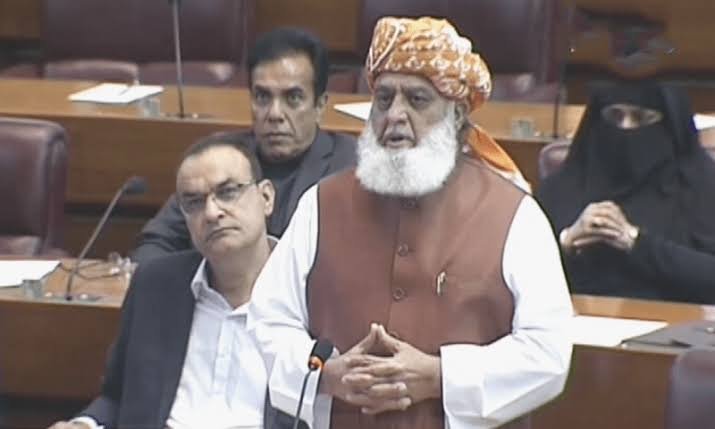
ISLAMABAD: Parliamentary speeches are not merely a collection of words. At times, the atmosphere inside the assembly, the expressions of lawmakers and their silence become just as significant as the speeches themselves. In Pakistan’s political arena, certain leaders attract considerable attention through their style of address and the issues they raise. A similar scene was witnessed during Maulana’s recent speech in Parliament, when several lawmakers were seen sitting with their heads bowed.
During his address, Maulana presented his views on political matters and democratic values. As he continued speaking, the posture and expressions of some members sitting in the assembly became a noticeable part of the scene. Their silence and bowed heads attracted the attention of viewers and sparked questions about the atmosphere inside the parliamentary chamber.
The Speech and the Atmosphere Inside Parliament
In parliamentary politics, delivering a speech is a fundamental right of every elected representative. However, the atmosphere inside the assembly during an important address can also become a subject of public discussion.
Sometimes, speeches are met with applause, support or strong disagreement from other lawmakers. On other occasions, silence becomes the most noticeable response.
During Maulana’s address, some members were seen sitting with their heads lowered. Was it simply a coincidence? Were they listening attentively, reflecting on the points being raised, or expressing a reaction that was not immediately apparent? Only the members themselves can clarify the meaning behind their silence.
Nevertheless, the scene attracted attention and became a talking point among viewers and political observers.
The Importance of Freedom of Expression in Democracy
Parliament is one of the most important institutions in a democratic system. It provides a platform for elected representatives to raise public concerns, discuss national affairs, question government policies and present differing political positions.
Freedom of expression, criticism and disagreement are essential elements of parliamentary democracy. Every political leader has the right to present their position, while other members have the right to agree, disagree or respond through democratic means.
A political speech should ultimately be assessed on the basis of its arguments, evidence and the issues it raises. Similarly, the reactions of lawmakers should be viewed in their proper context, rather than interpreting silence or a bowed head as proof of a particular political position.
When Silence Becomes Part of the Political Scene
Not every speech delivered in Parliament receives the same public attention. Some addresses remain part of political discussion because of their subject matter, tone and the questions they raise.
Maulana’s address, along with the scene witnessed inside the assembly, became a moment of interest for viewers.
In the corridors of power, everyone may have an opportunity to speak, but the reactions of those listening can also become part of the wider political conversation.
Maulana continued speaking, some faces remained bowed, and the assembly witnessed a silence that seemed to tell its own story.
What that silence actually meant is a question for the viewers and those present in the assembly to consider.


Comments (0)
No comments yet — be the first to comment.
Leave a Comment