




Columns
Gwadar International Airport: A Strategic Masterpiece or a Disconnect from Economic Reality?
31-Oct-2026 — Qazi Jawad
0 Comments
7 Views
اردو میں پڑھیں
By: Qazi Jawad
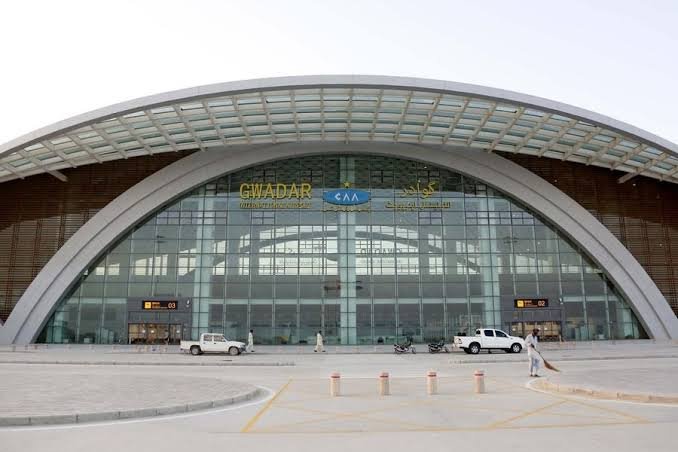
The newly developed Gwadar International Airport is undoubtedly one of Pakistan’s major infrastructure projects. Located in the country’s strategically important coastal city, the airport features modern facilities, a runway approximately 3.5 kilometres long, and a vast area spanning around 4,300 acres. Its capacity to accommodate large aircraft presents it as a potential aviation hub for the future. However, the real success of this project will not be determined by the size of its runway or the sophistication of its terminal, but by its practical use and economic contribution.
Gwadar Airport was designed to handle approximately 400,000 passengers annually. Completed in October 2024, it began commercial operations in January 2025. Despite this milestone, the limited number of flights raises an important question: does Gwadar currently have the economic and commercial activity required to support such a large aviation facility? If flight operations remain limited and passenger traffic fails to reach the expected level, even a modern international airport may struggle to operate at its full potential.
Comparisons between Gwadar and Dubai must also be made in light of ground realities. Dubai’s emergence as a global aviation hub is supported by international trade, tourism, investment, industrial activity and an extensive network of international air connections. Gwadar, by contrast, still has a relatively small permanent population, limited local economic activity and modest demand for air travel. Transforming any airport into an international transit hub requires much more than a long runway. It needs a strong economic foundation, consistent passenger traffic, an established cargo network and the interest of international airlines.
The security situation in Balochistan is another important challenge facing the project. A peaceful and stable environment is essential for attracting investors, tourists and international airlines. Similarly, effective road connectivity between the airport, Gwadar city and the port, along with industrial development and commercial activity, cannot be overlooked. Without economic activity around the airport, its practical benefits may remain limited.
It is also important to recognise that Gwadar Airport should not be judged solely on the basis of immediate profitability or current passenger numbers. The project is part of the long-term development strategy of the China-Pakistan Economic Corridor (CPEC), which aims to strengthen regional connectivity, trade and investment. Future growth in port operations, industry, commerce and regional transport could increase the airport’s importance. However, future possibilities should not be treated as a substitute for present economic realities.
The government therefore needs to adopt a comprehensive strategy to make Gwadar Airport fully functional. Expanding flight connections, creating employment opportunities for local residents, promoting tourism, encouraging industrial investment, improving connectivity with the port and strengthening the security environment are all essential steps towards achieving this goal.
Gwadar International Airport is a major national project, but its true success will not be measured by its construction alone. Its real value will depend on the economic activity, employment, trade and public convenience it generates. The question is not simply how large Gwadar Airport is, but how effectively it can contribute to Pakistan’s economy.




Comments (0)
No comments yet — be the first to comment.
Leave a Comment